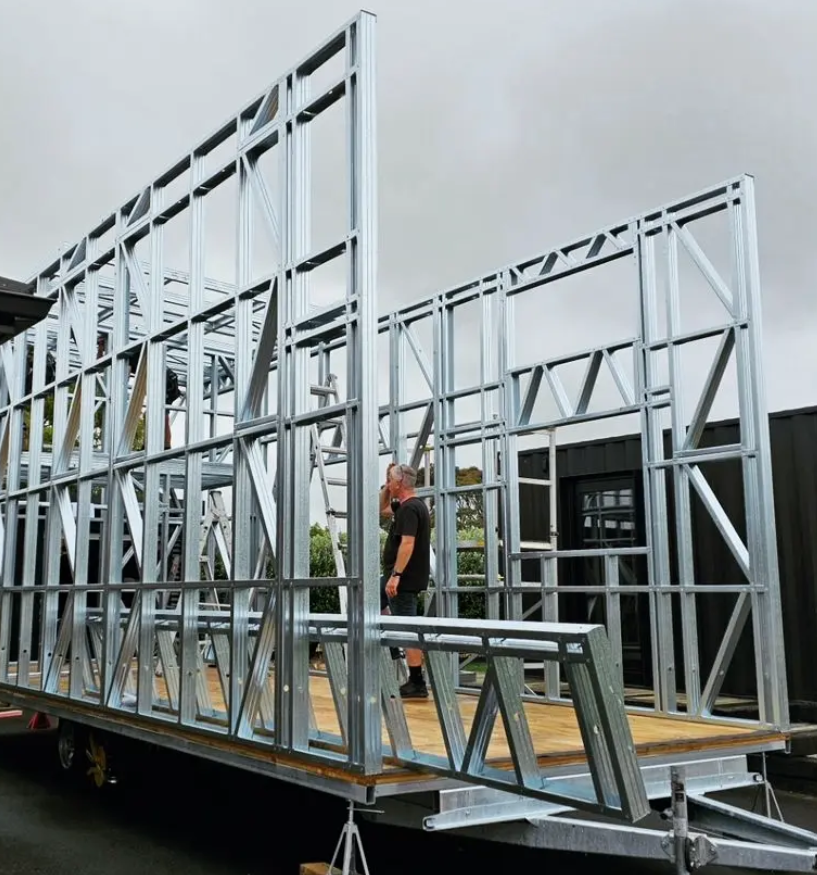
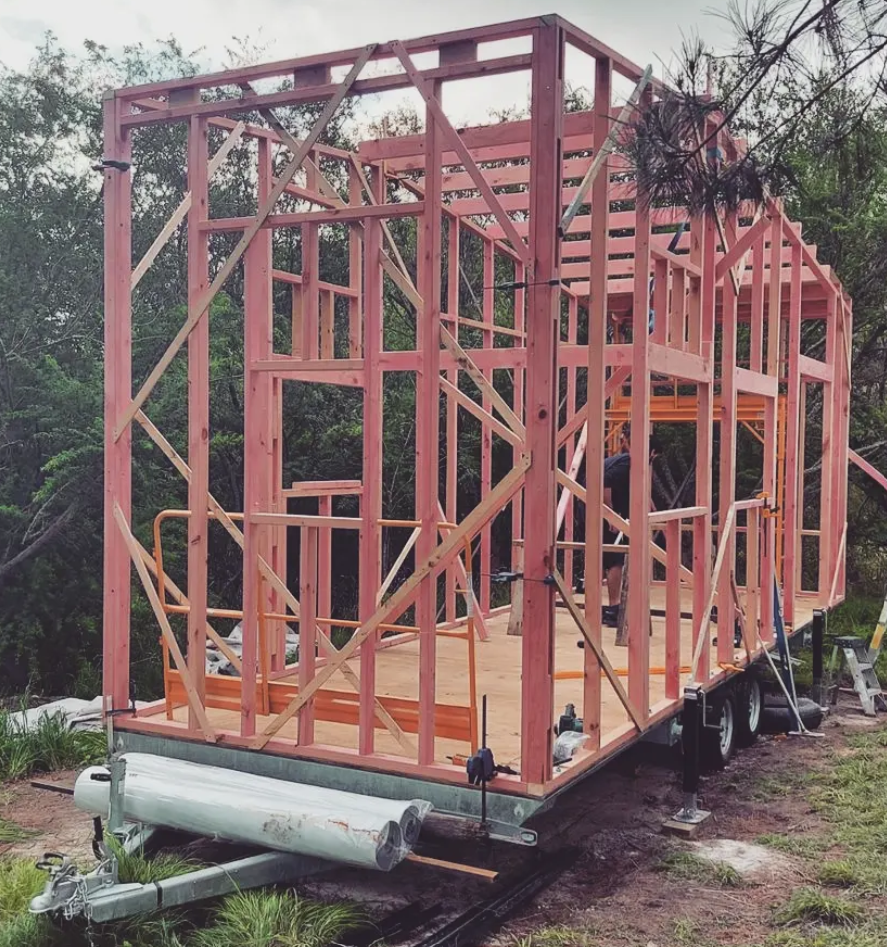
Timber vs Steel Framing for Mobile Tiny Houses
Choosing between timber and roll form steel framing for a tiny house on wheels? Here's how they stack up for NZ conditions.
Timber Framing
Pros
Available at every local yard with no lead-time
Naturally insulating with no thermal bridging
Easy DIY with standard tools and fixings
Ability to change the design on the fly
DIY labour savings if you're building it yourself
Cons
Heavier, which can be critical for a mobile structure, also heavier to stand frames
Can rot, warp, or get borer if not sealed properly
More movement and flex when mobile
Can bow or twist, meaning more work to straighten
Roll Form Steel Framing
Pros
Higher strength-to-weight ratio means lighter, which is the bigger winner for mobile tiny houses and standing frames
Dead straight, precision measurements, no twist
Screwed together with Tek screws, fast once you know the system
Doesn't rot, doesn't get eaten by borer, no moisture-related warping
Cons
Thermal bridging means it needs a thermal break
Design needs to be dialled in before building, hard to modify after
Minor rust risk if the galv coating gets scratched
The Bottom Line
For a build that's going to be towed and lifted, steel's weight savings and durability tend to win out. Timber's more suited to a simple and DIY-friendly build or non-movable structures. We produce steel framing.